

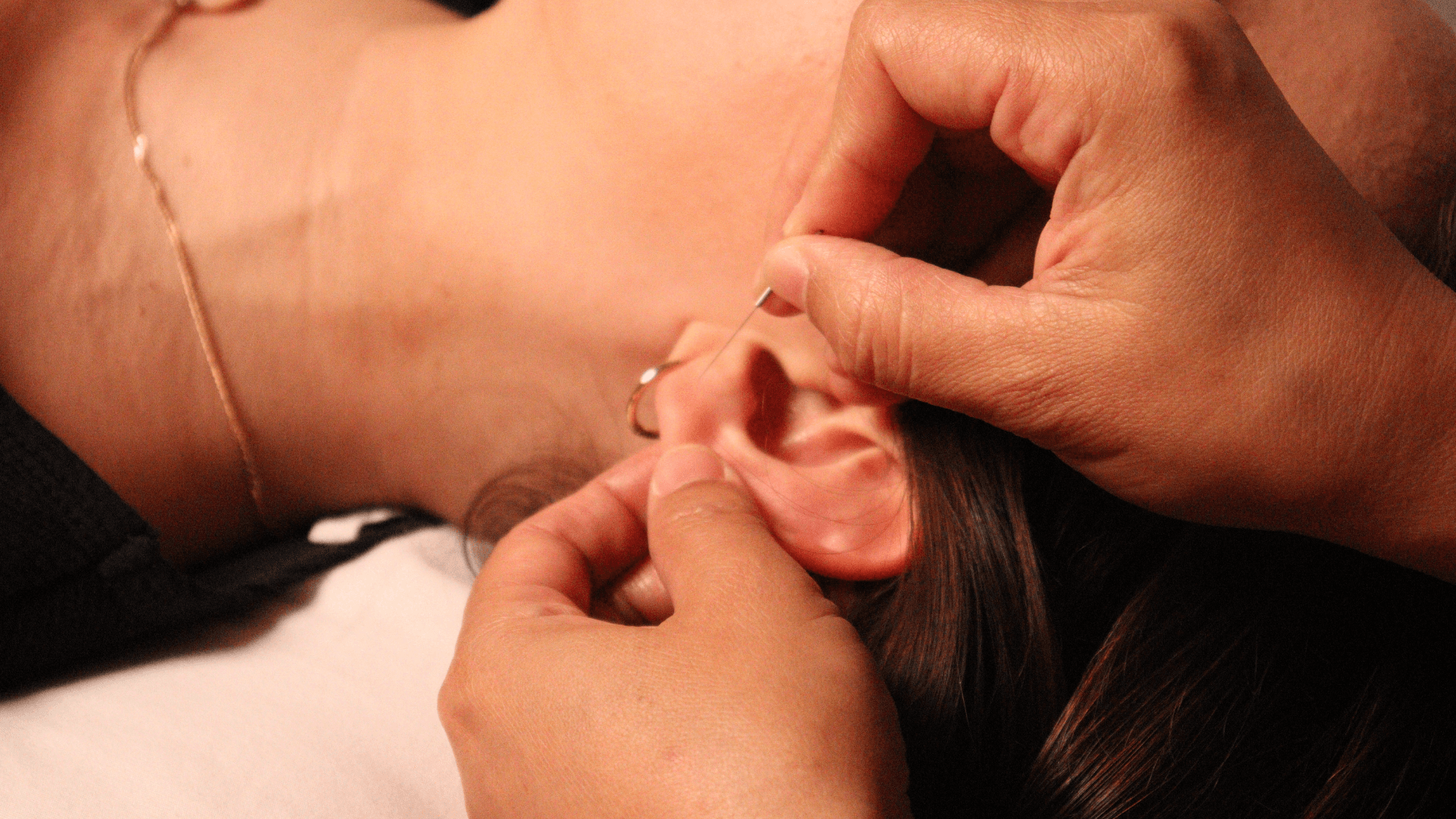
You have probably already decided that acupuncture is worth trying. The part you keep circling is the needles. Underneath that sits a quieter worry: whether acupuncture is safe for you specifically. Your medication, your pregnancy, or a condition you are not sure is even relevant. Both concerns deserve a plain, specific answer.
What the needles actually are
Acupuncture needles are single-use, sterile, and individually packaged. Your practitioner opens each one in front of you, uses it once, and disposes of it. They are far thinner than what you are picturing. A hypodermic needle has to be hollow because something passes through it. An acupuncture needle carries nothing, so it can be made far finer. It is solid, and closer to the width of a hair.
What you will feel during a session
Most people feel little to nothing on insertion. Once a needle is in place, you may notice mild warmth, heaviness, a dull ache, or light tingling. That response is common and welcome. Sharp or lasting discomfort is uncommon. If you feel it, your practitioner adjusts right away. You can speak up at any moment.
What can happen afterwards
You might notice slight bruising at a point. Some people feel briefly lightheaded or a wave of tiredness for the rest of the day. Occasionally you may feel more emotional than usual for a day or so. All of these are minor and short-lived.
What to tell your practitioner before your first session
Mention any of the following: pregnancy or trying to conceive, any medication including blood thinners, any bleeding or clotting condition, a pacemaker or other implanted device, a compromised immune system, recent surgery, any condition currently under a doctor's care.
Mentioning something on this list rarely means acupuncture is off the table. It means your practitioner adjusts to you.
What registration actually protects you from
In British Columbia, acupuncturists must be registered with the College of Complementary Health Professionals of BC. That registration means assessed training, enforced hygiene standards, a formal complaints process, and a public register you can check by name before your first session.
Where this leaves you
The practitioners at Zen Quest Wellness look below the surface to understand the pattern and the root cause beneath what you first bring in. When you are ready to be known in full, that is the kind of care waiting for you.