You've been to the doctors. Bloodwork's normal. Specialists shrugged.
But your body tells a different story.
The tension in your shoulders won't unknot. Sleep feels like a distant memory. Your energy crashes by 2pm, and you're done with people saying "just rest more" when rest stopped working months ago.
So you're looking into alternatives: acupuncture, massage, maybe Reiki. And that's where you hesitate.
Nobody's Listening to Your Body
You describe your symptoms. The provider orders tests. When nothing shows up on the scan or bloodwork, you hear the same conclusion: nothing's wrong.
But you know something is wrong.
Except the fatigue isn't laziness. The pain isn't in your head. And the disconnection from your own body isn't something you can just think away.
Traditional medicine treats what it can measure. When your symptoms refuse to fit into diagnostic boxes, they give you surface-level fixes.
Pain meds. Sleep aids. Antidepressants prescribed "just to see if they help."
But what's driving it often goes unaddressed.
The Cost of Treating Symptoms Forever
Every week you manage symptoms instead of understanding their source, the deeper the patterns dig in.
Your nervous system can settle into a constant state of stress. Over time, the body may stop signaling as clearly. The tension starts to feel normal. The fatigue starts to feel like your baseline.
You forget what feeling good even feels like.
And then something worse happens: the signals get quieter. The disconnect widens. Years slip by, and suddenly you're living in a body you barely recognize.
What Reiki Actually Does
Reiki is an energy healing technique that works with your body's natural ability to heal itself. Practitioners use light touch, or hover their hands above your body, to channel energy and clear energy blockages.
In plain terms: Reiki restores flow where your body's energy has gotten stuck.
When stress, trauma, chronic tension, or emotional baggage you’ve carried for years disrupt that energy flow, symptoms appear. Reiki works at that energetic level to bring things back into balance.
Your body is a small universe. Real healing starts at the consciousness level, not just the physical.
But Does It Actually Work?
You're skeptical. Good.
Energy fields weren't covered in high school biology. So what does the research actually say about reiki benefits?
Studies show that Reiki can reduce pain, lower anxiety, improve sleep, and support your body's natural healing processes.
Does science fully understand how Reiki works? Not yet. But the same was true for acupuncture 30 years ago, and now insurance covers it and pain specialists recommend it.
What a Reiki Session Feels Like
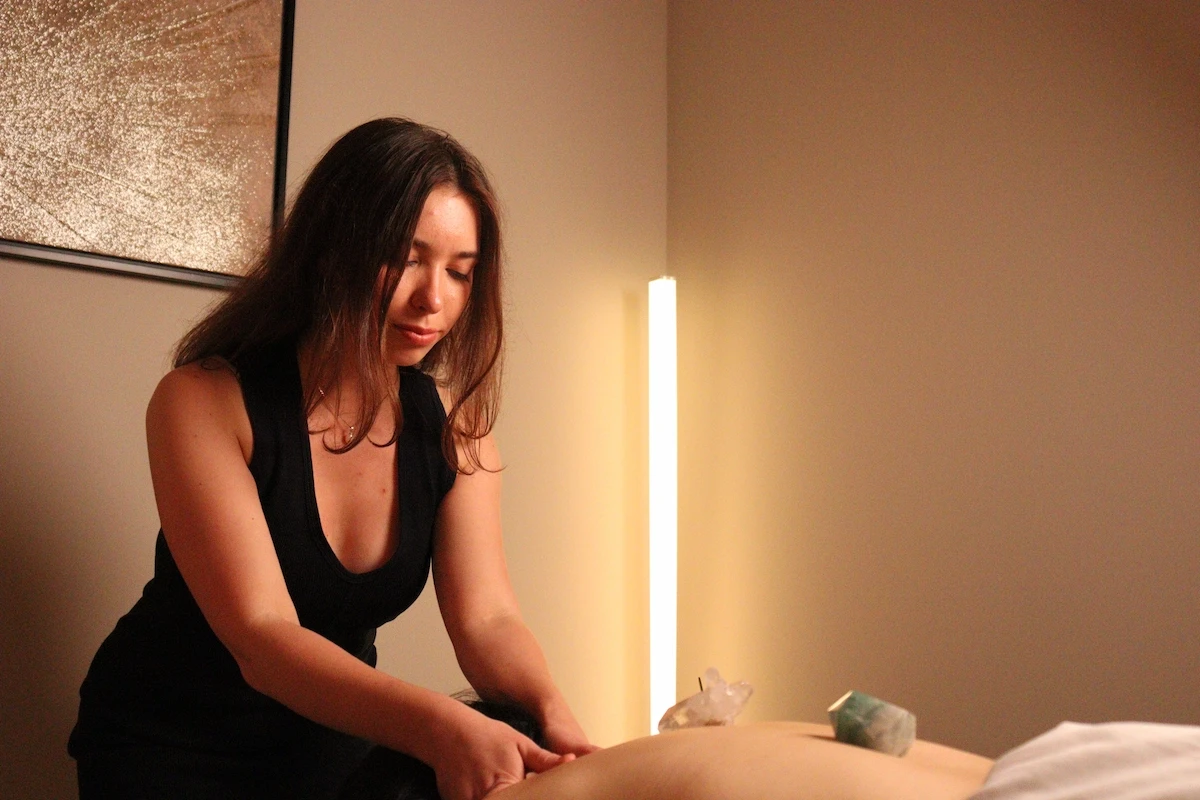
You lie fully clothed on a treatment table in a quiet, intentionally designed space. Your practitioner places their hands lightly on or just above specific areas of your body, working through energy fields.
Most people feel deep relaxation. Some notice warmth or tingling. Others describe it as the first time their nervous system has genuinely let go in months.
Reiki doesn't force anything. It simply creates space for your body to do what it already knows how to do: heal.
Sessions typically last 60-75 minutes. Some people feel shifts immediately. Others notice changes over the next few days as their body integrates the work.
The Questions You're Probably Asking
"I don't believe in energy healing."
You don't have to. Your body responds to Reiki whether your brain believes in it or not. Skepticism doesn't block the process.
"How is this different from just relaxing?"
Relaxation is a side effect, not the goal. Reiki is a whole body practice. It's not just about calming down in the moment, but about creating space to reconnect with what your body's been holding, so you can find balance at the energy level. You can be relaxed and still carry unresolved tension deeper down.
"Will one session fix everything?"
Reiki works cumulatively. One session can bring relief and clarity. Ongoing sessions let your body tackle deeper patterns over time. Healing isn't linear, and your practitioner will create a personalized roadmap with you.
"Is this covered by insurance?"
Reiki isn't typically covered under extended health benefits, but many employer Wellness Spending Accounts do include it. Check with your HR or plan provider to see if it applies to you.
How This Approach Supports You
Because Reiki doesn't treat your symptoms in isolation. It addresses the energetic imbalances underlying your symptoms.
Your chronic shoulder tension isn't just tight muscles. It's years of holding responsibility, carrying stress, bracing for the next thing. Your fatigue isn't just lack of sleep. It can reflect a nervous system that hasn't had the chance to truly settle.
Reiki meets your body where it is and can help release and restore balance.
At Zen Quest Wellness, our Reiki practitioners don't just apply techniques. They show up fully. Every element of your session is intentionally designed—nothing's random.
Your Body's Been Trying to Tell You Something
The tension, the fatigue, that nagging sense that something's off—these aren't problems to suppress. They're signals pointing you toward what needs attention.
Reiki may help you tune into those signals. Many find it creates a space for the body to shift out of a stressed, survival mode and into deeper rest.
Instead of just managing symptoms, Reiki invites you to explore what's underneath them.
Book your Discovery Session today. In 75 minutes, your practitioner will map the energetic and physical patterns behind your symptoms. They will create a personalized healing plan and provide your first treatment. You'll leave with clarity on what's actually happening and your first real taste of relief.
Your body already knows what it needs. Reiki just helps you listen.
Book now at zqw.janeapp.com or call (236) 200-5289.