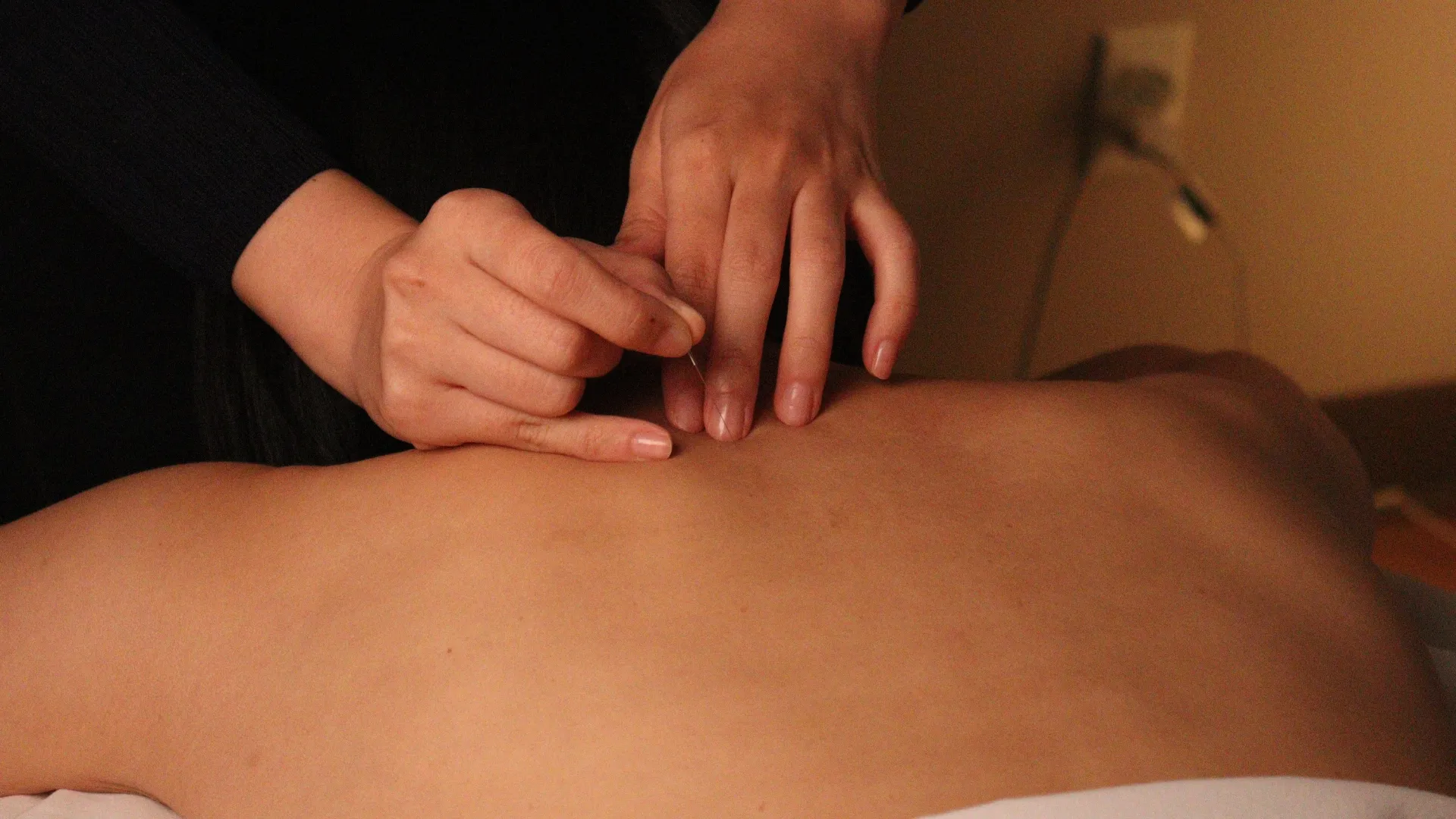
A practitioner says the treatment will work on your Liver. Your liver is fine. You had bloodwork last month. The confusion is immediate and reasonable.
The Liver channel in acupuncture is named for a set of functions. Those functions extend well beyond the organ itself. Understanding that distinction makes the entire framework legible.
What a Meridian Is
A meridian is a functional pathway. It describes a route along which the body's regulatory activity can be assessed and influenced.
There are twelve primary channels. They run as a continuous circuit, each flowing into the next in a fixed sequence. Qi is the term for the functional activity that moves through them. For a fuller picture of what acupuncture actually does and how it works, the framework is explained there in full.
Each channel carries a name. That name points to a domain of function, and a trained practitioner uses it to describe a pattern of function.
When a needle is placed, specific activity follows at and beyond the point. There is a fuller account of what happens at the point during a session.
The Organ Names Are Functional Labels
This is the part worth sitting with.
In the TCM framework, every channel is named for a functional domain. The name references an organ because that organ anchors the domain. The domain itself is wider.
The Liver channel governs the smooth movement of Qi through the body. It relates to how a person manages frustration, tension, and the body's own cycles. A practitioner working with the Liver channel is assessing that domain of function. No claim is being made about the anatomical liver or any disease within it.
The Spleen channel governs digestion in the broadest sense: the transformation of food and experience into usable energy. When a practitioner mentions the Spleen channel, the concern is how the body extracts and distributes what it takes in.
The Kidney channel governs reserves. It relates to deep rest, recovery capacity, and long-term stamina. It describes how much a person has in reserve, and how quickly those reserves replenish.
A channel name is a shorthand for a functional pattern. Practitioners use these names because the framework is precise and consistent. They carry no implication of organ disease, and a practitioner making a channel assessment is doing something categorically different from a physician assessing organ health.
These two frameworks describe the body differently. They can coexist. Neither cancels the other.
The Twelve Channels: A Reference
The twelve channels are organized as six yin-yang pairs. Each pair governs a related domain.
Lung and Large Intestine
Intake and release. What the body draws in and what it lets go.
Spleen and Stomach
Transformation and digestion. How the body processes and distributes nourishment.
Heart and Small Intestine
Circulation and sorting. How the body sustains and discerns.
Kidney and Bladder
Reserves and filtration. Depth of capacity and the management of what remains.
Pericardium and San Jiao
Protection and distribution. The channel that surrounds the heart's function, and the one that coordinates activity across the body's three regions.
Liver and Gallbladder
Flow and decision. The smooth movement of activity and the capacity to act on it.
Arm Channels and Leg Channels
Six of the twelve channels run along the arms. Six run along the legs.
This is why points on the hands, forearms, ankles, and lower legs appear so often in a session. A point on the forearm can address a functional domain far removed from the arm itself. The channel's influence follows the pathway along its whole length.
The Circuit and the Clock
The twelve channels run in a fixed order. TCM maps that sequence onto a twenty-four-hour cycle, assigning each channel a two-hour window of peak activity.
The Liver window falls between 1 a.m. and 3 a.m. A practitioner may ask about sleep quality within that window because the timing carries functional information. For the full picture of what that cycle means, why you wake at the same hour every night addresses it directly.
What This Means for a Client
A practitioner trained in this framework will ask questions that can seem unrelated to the presenting concern. Questions about digestion, sleep, stress load, and cycles are all channel assessments. Each answer helps locate where in the circuit the functional pattern is disrupted.
Two clients arriving with the same complaint may receive entirely different point selections. The channel assessment is what guides the treatment. The broader diagnostic framework is set out under what Traditional Chinese Medicine actually is.
A Map Is Still Useful
The meridian system is a map. Like any map, it describes something real without being identical to the territory.
Its value is practical. It gives a trained practitioner a consistent, detailed framework for assessment. It tells them where to work, in what order, and why.
That precision is what the framework was built for. Centuries of careful observation produced a system that remains clinically useful today.
To learn more about the practitioners at Zen Quest Wellness and the depth of training behind this framework, visit the team page. The background behind each practitioner's approach is there.